The First Appearance of Wolverine: A Small Panel That Changed Comics Forever

When comic book fans talk about defining moments in Marvel history, one name inevitably claws its way to the top: the first appearance of Wolverine. Today, Wolverine is one of the most recognizable superheroes in the world—but his debut was anything but flashy. In fact, his first cameo appearance is a blink-and-you-miss-it moment tucked into the final panel of The Incredible Hulk number 180, published in October 1974.
That single panel would ignite a legacy that reshaped Marvel Comics, influenced generations of storytelling, and helped redefine what a superhero could be.
A Brief but Explosive Debut

Wolverine’s first appearance is technically just a cameo. At the end of Hulk number 180, readers are introduced to a mysterious Canadian government agent sent to stop the rampaging Hulk and Wendigo.
He’s short, aggressive, and dressed in a bright yellow-and-blue costume—hardly the brooding antihero we know today.
The very next issue, The Incredible Hulk number 181, delivers Wolverine’s first full appearance. Here, he battles Hulk in a brutal, three-way clash involving Wendigo. It’s raw, chaotic, and immediately establishes Wolverine as something different. He’s not noble. He’s not polite. He’s not even particularly likable.
And that was the point.
Created by Len Wein (writer), John Romita Sr. (designer), and Herb Trimpe (artist), Wolverine was envisioned as a fierce Canadian operative—a “little Wolverine,” scrappy and relentless.
No one could have predicted what he would become.
Why The First Appearance of Wolverine Matters
Wolverine’s debut marks a turning point in comic book storytelling for several reasons.
First, he introduced a new kind of hero—one who didn’t fit the clean-cut mold established by characters like Captain America or Spider-Man.

Wolverine was violent, temperamental, and morally ambigous.
At a time when the Comics Code Authority still loomed over storytelling, Wolverine pushed boundaries. His claws (originally implied to be part of his gloves) and feral attitude hinted at a darker tone that Marvel would increasingly embrace in the late 1970s and beyond.
Second, his introduction expanded Marvel’s global scope. As a Canadian government agent, Wolverine signaled Marvel’s growing interest in international characters and settings—a trend that would later explode with teams like Alpha Flight and the global lineup of the X-Men.
The Slow Burn of Popularity
Unlike many iconic heroes, Wolverine didn’t become an overnight sensation.
After Hulk number 181, he appeared sporadically before being recruited into the revamped Giant-Size X-Men number 1. That issue changed everything.

Placed alongside a diverse, international team—including Storm, Nightcrawler, and Colossus—Wolverine began to evolve. Writers like Chris Claremont deepened his character, transforming him from a hot-headed brawler into a complex antihero with a mysterious past.
By the 1980s, Wolverine had become many things: a breakout star of the X-Men, a symbol of Marvel's darker storytelling edge, and a fan-favorite with massive crossover appeal.
His popularity eventually rivaled—and in some eras surpassed—that of Spider-Man and the Hulk.
Controversy and Confusion
Wolverine’s early history is filled with quirks and controversies that still fascinate collectors and fans.
One of the biggest debates in comic collecting is whether Hulk number 180 or Hulk number 181 should be considered Wolverine’s “true” first appearance.
The market has largely crowned Hulk number 181 as the definitive key issue, often commanding astronomical prices in high-grade condition. However, Hulk number 180 has surged in value as collectors recognize its historical importance.
The Claws Debate
Originally, Wolverine’s claws were not explicitly part of his body. Early depictions suggested they might be attached to his gloves. It wasn’t until later stories that the idea of retractable bone claws—and eventually the adamantium skeleton—became canon.

This evolution highlights how loosely defined the character was at the start. Wolverine wasn’t fully “Wolverine” yet—he was a concept still taking shape.
Costume Criticism
That original yellow-and-blue suit? It’s iconic now, but at the time, it clashed with Wolverine’s feral personality. Over time, artists and writers leaned into darker tones, eventually giving us the brown-and-tan suit and the gritty aesthetic fans associate with him today.
Impact on the Comic Book Industry
Wolverine’s first appearance didn’t just introduce a character—it helped shift the entire industry.
Rise of the Antihero
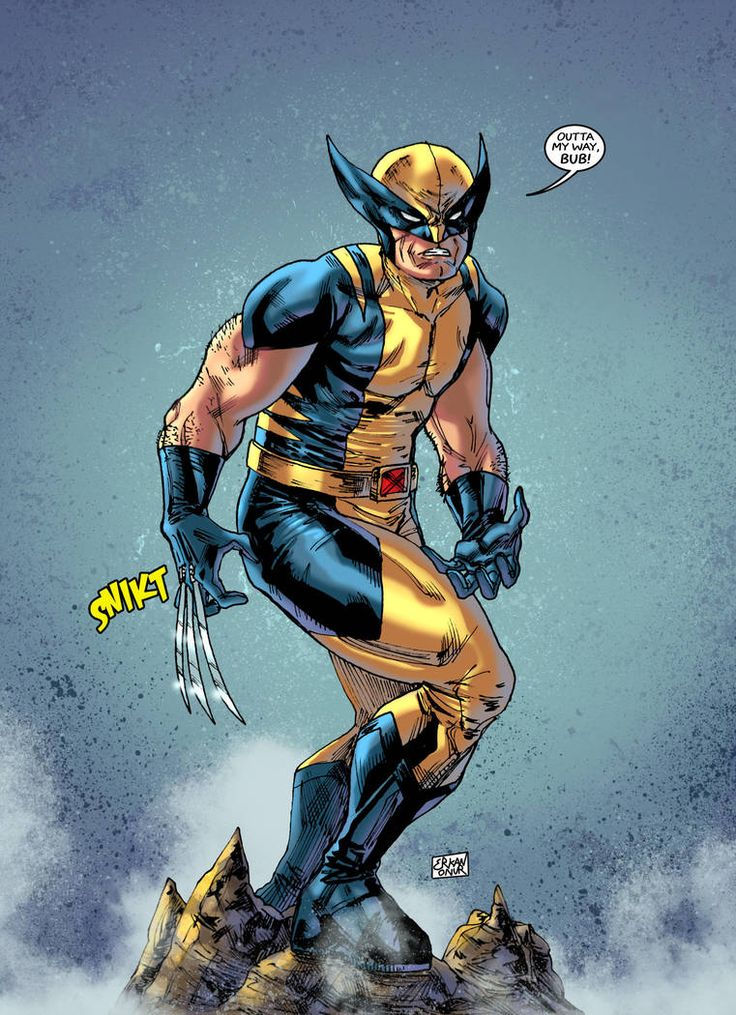
Wolverine paved the way for a wave of darker, more complex heroes. Without him, it’s hard to imagine the success of characters like Punisher, Deadpool or even the darker interpretation of Batman in DC Comics.
He proved that readers were ready for flawed protagonists—characters who struggled with violence, identity, and morality.
Collector Boom
Hulk number 181 became one of the most sought-after comics of all time. Its rise in value helped fuel the idea of “key issues” as major investment pieces—a concept that still drives the comic market today.
Franchise Expansion
Wolverine became a cornerstone of the X-Men franchise, which would go on to dominate comics, animation, and film. Without his introduction, the X-Men’s trajectory—and Marvel’s overall success—might have looked very different.
Why Fans Still Care Today
Decades later, Wolverine’s first appearance remains a cornerstone of comic book culture.
For collectors, it’s a grail. For writers and artists, it’s a lesson in how even a minor character can evolve into a legend. And for fans, it’s a reminder that greatness doesn’t always arrive fully formed—it can begin in a single panel.
What makes Wolverine endure is not just his claws or healing factor—it’s his complexity. That complexity began the moment he stepped onto the page in Hulk number 180, snarling, ready to fight, and completely unlike anything readers had seen before.

Final Thoughts
Wolverine’s debut is proof that comic book history is often made in the margins. A last-page cameo, a new character thrown into a chaotic battle—these small moments can ripple outward into decades of storytelling.
From that first appearance to global superstardom, Wolverine embodies the evolution of comics themselves: bolder, darker, and more human.
And it all started with a single panel—and a phrase that would echo through Marvel history:
“Why not try your luck against the Wolverine!”


Comments